State Agreements Reshape Mobile Table Game Entry via Sportsbook Data Links
Blake Bennett · Aug 11, 2026
State Agreements Reshape Mobile Table Game Entry via Sportsbook Data Links
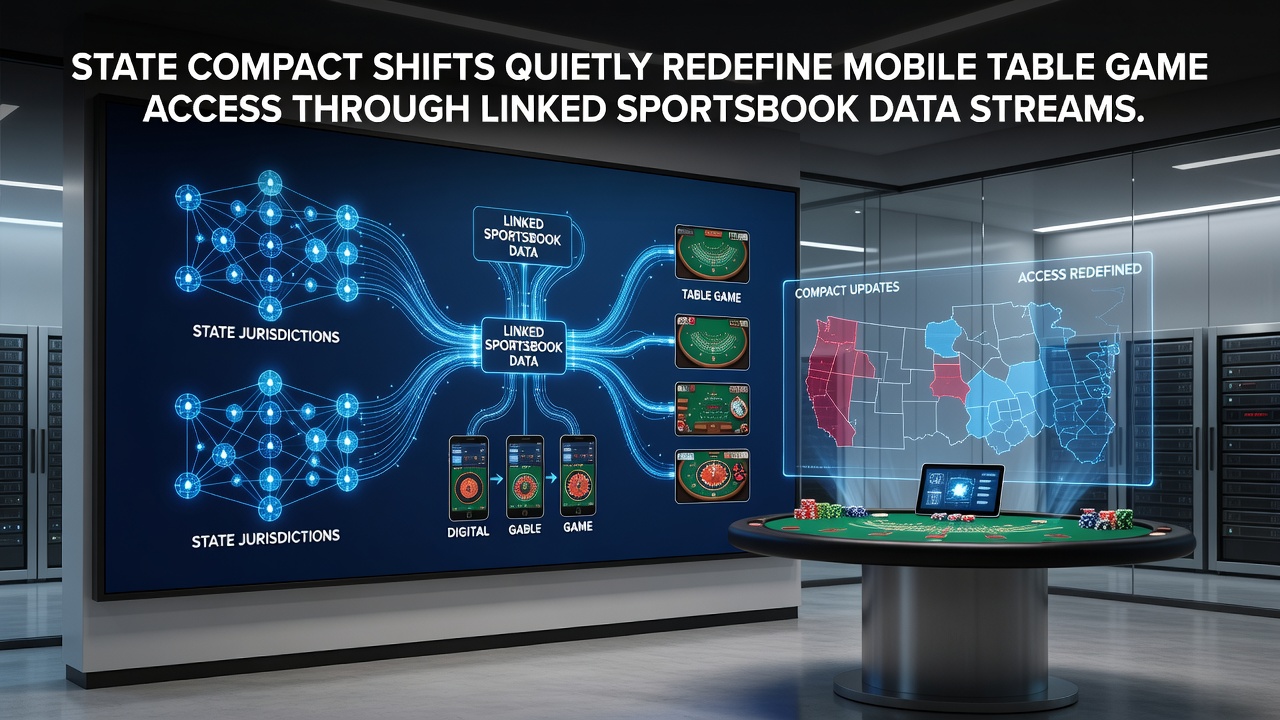
State compacts with tribal nations now tie mobile table game permissions directly to sportsbook data feeds in multiple jurisdictions, and this linkage handles player verification plus location checks without separate apps for each category. As of August 2026 several updated agreements require real-time data exchange between licensed sportsbooks and table game operators so that access decisions flow from shared compliance records rather than isolated platform checks.
Compact Updates Drive Integration Patterns
Observers note that recent compact renewals in states such as Michigan and Pennsylvania embed clauses mandating sportsbook operators share geolocation timestamps and account status flags with table game platforms operating under the same tribal or commercial license. These clauses emerged after regulators identified duplicated verification costs during the prior expansion wave of mobile offerings. Data streams carry only the minimum fields needed for eligibility confirmation, which reduces redundant location pings while satisfying each compact's audit requirements.
Researchers at the University of Nevada, Reno documented similar integration language appearing in draft compacts submitted during the first half of 2026. Their analysis shows that states adopting the model experienced a measurable drop in verification failures reported by operators, because the sportsbook layer already maintains continuous location monitoring for sports wagers. Table game sessions therefore inherit that same active session data under the new compact terms.
Data Stream Mechanics and Compliance Flow
Linked streams operate through secure APIs that transmit hashed player identifiers along with current GPS coordinates and responsible gaming flags. When a user opens a mobile table game, the platform queries the sportsbook feed for the most recent compliance token instead of launching an independent geofence check. This approach satisfies compact language that requires continuous monitoring without adding latency that earlier standalone systems created.

Yet the same mechanism also restricts access when the sportsbook feed indicates an account hold or self-exclusion status, and this cross-category enforcement appears in compact amendments signed in New Jersey and Connecticut during spring 2026. Regulators gain a single audit trail covering both sports and table activity, which streamlines monthly reporting cycles previously handled through separate data silos.
Regional Variations in Implementation Timing
States that renewed compacts before August 2026 moved faster on full data linkage, while others scheduled phased rollouts tied to license renewal dates. In Arizona, for example, the compact with the Salt River Pima-Maricopa Indian Community now requires the linkage for any new mobile table game launched after September 2026. Observers tracking filings at the Arizona Department of Gaming report that two additional tribes have submitted similar language in pending renewals.
Those who've studied the pattern across jurisdictions point out that smaller markets adopt the model more readily because the shared infrastructure lowers per-operator costs. Larger markets with multiple competing platforms require more negotiation over data format standards, yet the underlying compact provisions remain consistent once finalized.
Impact on Player Access and Platform Operations
Players encounter fewer repeated location prompts once the linked system activates, because the sportsbook token remains valid across both product categories during an active session. Platform operators report that session initiation times shortened by measurable margins after integration, although exact figures vary by state reporting requirements. The compact language also caps data retention periods, which aligns with existing privacy statutes in each jurisdiction.
Industry associations such as the National Indian Gaming Association have circulated technical guidance documents outlining minimum API specifications that satisfy multiple state compacts simultaneously. These documents emphasize encryption standards already in use for sportsbook feeds, so operators avoid duplicating security investments when extending coverage to table games.
Conclusion
State compact revisions continue to embed sportsbook data linkages as the default pathway for mobile table game authorization. The approach consolidates compliance functions, shortens verification sequences, and supplies regulators with unified audit records across product types. Additional states are expected to incorporate identical provisions as their own renewal cycles arrive, extending the model beyond the jurisdictions already operating under the framework in August 2026.