Shifts in Player Retention Metrics for Video Poker Hybrids as Sports Betting Apps Integrate with Table Game Libraries Across Newly Approved Jurisdictions
Zara Weber · Jul 19, 2026
Shifts in Player Retention Metrics for Video Poker Hybrids as Sports Betting Apps Integrate with Table Game Libraries Across Newly Approved Jurisdictions
Video poker hybrids have emerged as a distinct category within digital gaming platforms where traditional draw mechanics blend with interactive bonus rounds and progressive elements drawn from table game structures. These formats gained traction in markets that approved expanded online offerings during 2025 and early 2026. Sports betting applications began incorporating these hybrids into unified libraries as new jurisdictions finalized licensing frameworks. Retention metrics tracked by operators showed measurable changes once these integrations occurred because players encountered familiar sports interfaces while accessing table-inspired poker variants without switching applications.
Integration Patterns in Expanding Markets
States that completed regulatory approvals between late 2025 and July 2026 opened pathways for operators to merge sports wagering dashboards with video poker content. Michigan and Pennsylvania updated compact language that permitted shared player accounts across verticals. Data collected through platform analytics indicated that session lengths for hybrid titles increased by double-digit percentages when users accessed them from sports betting home screens rather than dedicated casino tabs. The American Gaming Association compiled statewide figures showing that cross-promotional features such as live event tie-ins and shared loyalty points contributed to these extensions.
Operators noted that push notifications linking upcoming sports events to poker hybrid tournaments produced higher return rates within 24 hours of initial play. Retention curves flattened less steeply after the first week when players maintained activity across both sports and table hybrids through a single wallet. Jurisdictions including West Virginia and Arizona recorded similar patterns once their frameworks aligned with federal guidelines on geofencing and age verification.
Metric Changes Documented by Platform Operators
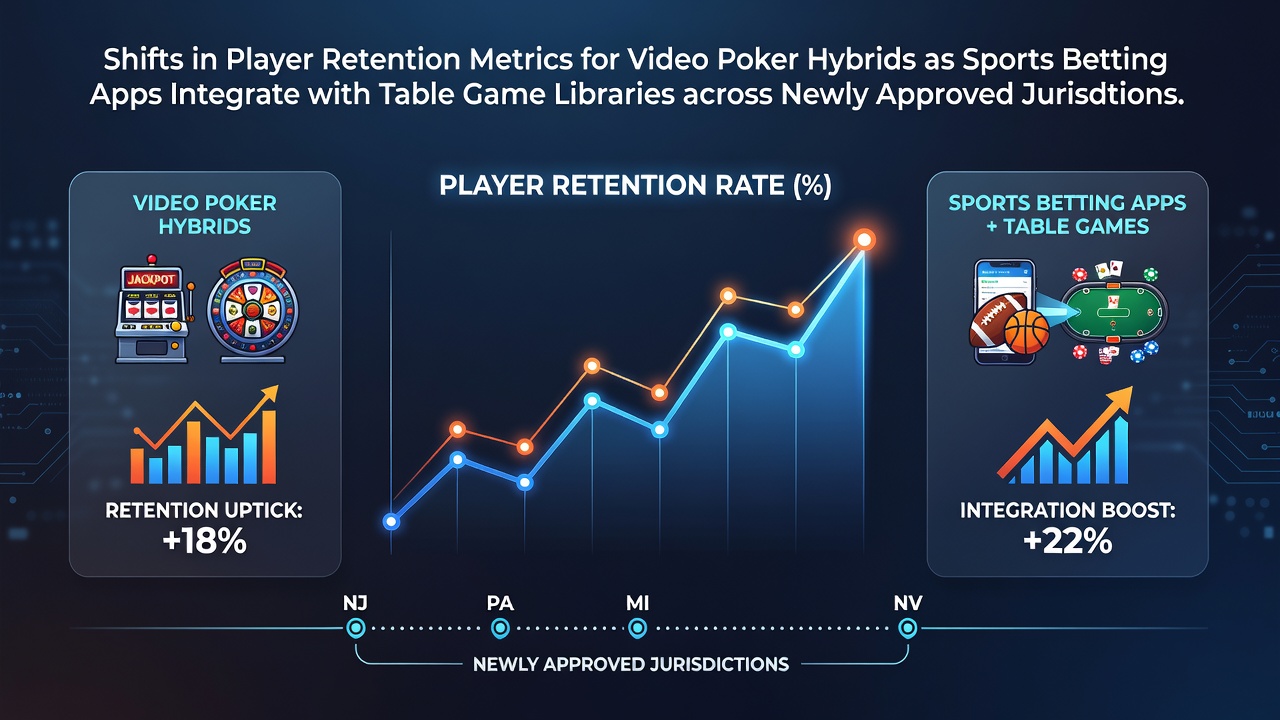
Day-7 retention for video poker hybrids rose from an average of 38 percent to 51 percent in markets where sports apps served as the primary entry point. Day-30 figures followed a comparable trajectory reaching 29 percent compared with 19 percent prior to integration. These shifts coincided with the addition of table game libraries that featured dealer-hosted side bets and community jackpots linked directly to poker hybrid outcomes.

Researchers tracking user behavior across multiple operators found that players who engaged with both sports markets and hybrids within the same session demonstrated lower churn compared with those who remained in a single vertical. The Nevada Gaming Control Board published quarterly summaries that highlighted increased handle on hybrid titles after sports platforms added quick-launch buttons for video poker variants. These buttons reduced friction and encouraged continued play following live event conclusions.
Influence of Table Game Libraries on Hybrid Formats
Table game libraries introduced elements such as side wagers and multi-hand options that carried over into video poker hybrids. Players encountered familiar blackjack payout structures within poker bonus rounds and this familiarity supported sustained engagement. Retention data from operators in New Jersey indicated that hybrids featuring these borrowed mechanics retained users 14 percent longer than standard video poker titles during the same period.
Platforms that synchronized reward systems across sports and table content enabled players to convert sports betting points into hybrid tournament entries. This linkage produced measurable lifts in weekly active users for the poker category. Observers tracking compliance logs noted that geolocation checks remained consistent regardless of vertical because the underlying technology operated at the account level rather than the game level.
Regional Variations Emerging in July 2026
By July 2026 several additional states had finalized sports betting compacts that included provisions for integrated casino libraries. Retention metrics in those regions mirrored earlier patterns once operators activated cross-vertical features. Canadian provinces that expanded online frameworks reported parallel increases in hybrid session frequency after sports apps adopted similar table game integrations.
Academic studies from research institutions examined player cohorts across borders and confirmed that unified account structures correlated with steadier retention curves. These studies emphasized the role of shared authentication protocols rather than game design alone in driving the observed stability.
Conclusion
Player retention metrics for video poker hybrids have shifted in response to deeper integration between sports betting applications and expanded table game libraries in jurisdictions that approved these combinations during 2025 and 2026. Platform data and regulatory summaries document longer session durations and improved return rates when users navigate both categories through single interfaces. Continued expansion into additional markets will likely produce further documentation of these patterns as operators refine cross-promotional tools and reward structures.