Regional Variations in Table Game Payout Structures Driven by Emerging Sports Betting Legalizations
Sofia Meier · Jun 2, 2026
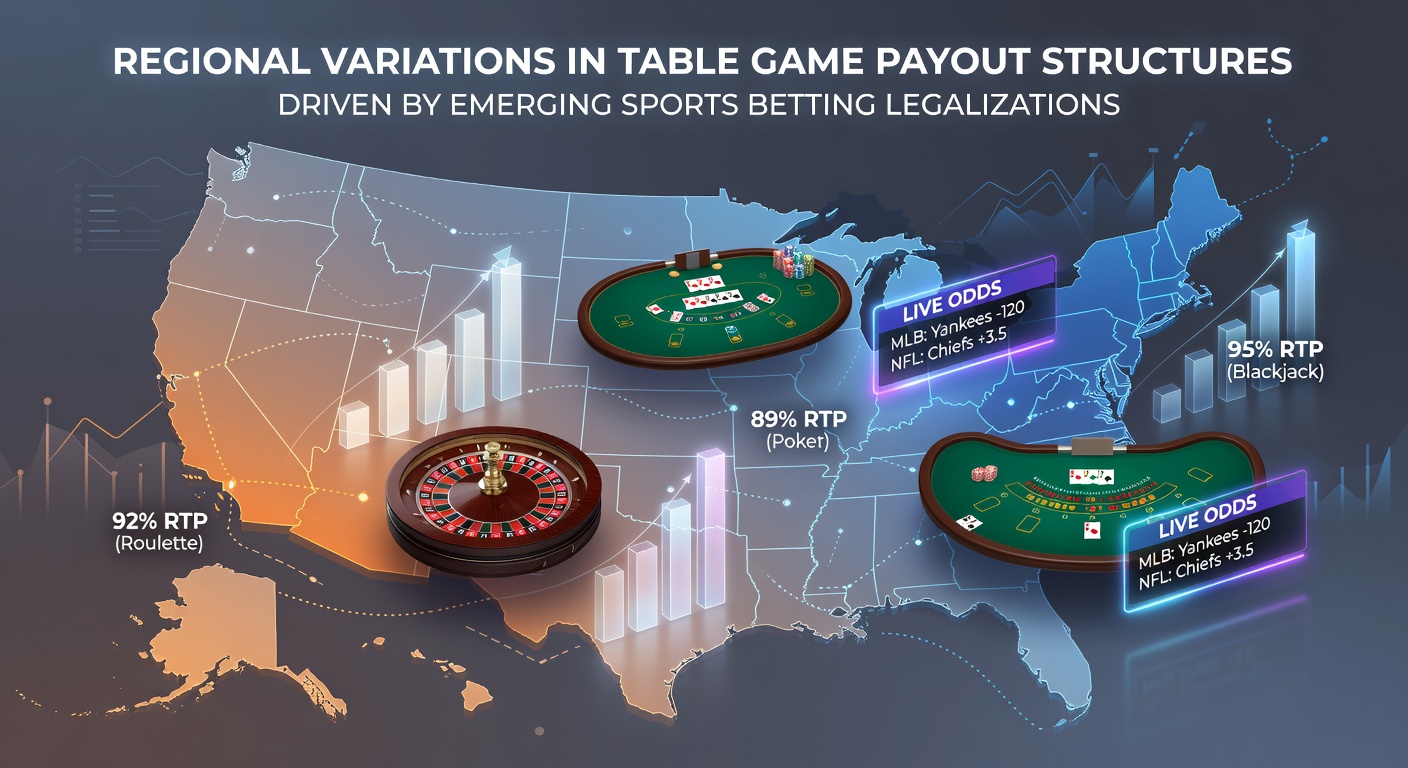
Regional Variations in Table Game Payout Structures Driven by Emerging Sports Betting Legalizations
Emerging sports betting legalizations continue to reshape table game payout structures across multiple jurisdictions as operators adjust rules to maintain competitive balance between sports wagering and traditional casino offerings; data from regulatory filings shows these shifts occurring at different rates depending on local market maturity and legislative frameworks.
States and provinces that introduced sports betting in recent years often see operators recalibrating blackjack and roulette payouts to capture crossover players, whereas regions with longer-established sports markets demonstrate more stable table game returns because existing infrastructure already accounts for diversified betting revenue streams.
North American Adjustments in Payout Percentages
Observers note clear differences between U.S. states that legalized sports betting after the 2018 Supreme Court decision and those with earlier frameworks like Nevada; in New Jersey for instance, several Atlantic City properties raised blackjack payout ratios on select tables from 3:2 to 6:5 during 2025 expansions tied directly to integrated sportsbooks, according to filings submitted to the New Jersey Division of Gaming Enforcement.
Canadian provinces present another pattern where Ontario's Alcohol and Gaming Commission data from early 2026 reveals operators offering higher roulette payout structures on American wheel variants to offset lower hold percentages in newly launched sports betting apps. Those adjustments emerged after legislative changes bundled mobile sports and table game licensing under single operator agreements.
European Market Responses and Cross-Border Effects
Across the European Union, countries that expanded sports betting access through 2025 directives show varied table game modifications, with Spain's Dirección General de Ordenación del Juego reporting that several Madrid casinos lowered baccarat commission rates from 5% to 4% on banker bets following the integration of in-play sports features. This move aligned operator strategies with new customer acquisition targets set by national regulators.
Germany's regional gaming authorities documented similar trends in 2026 where poker room rake structures tightened in venues near sports betting hubs, while payout schedules for three-card poker remained unchanged in areas without overlapping sports licenses. Researchers tracking these patterns highlight how proximity to sports betting venues influences the pace of table game revisions.
Asia-Pacific Developments as of June 2026
June 2026 marks a notable period for several Australian states where expanded sports betting frameworks prompted casinos in New South Wales to publish updated blackjack payout tables that include side bet multipliers previously restricted under older sports wagering rules. Industry reports indicate these changes coincided with the rollout of combined loyalty programs linking sports and table play.
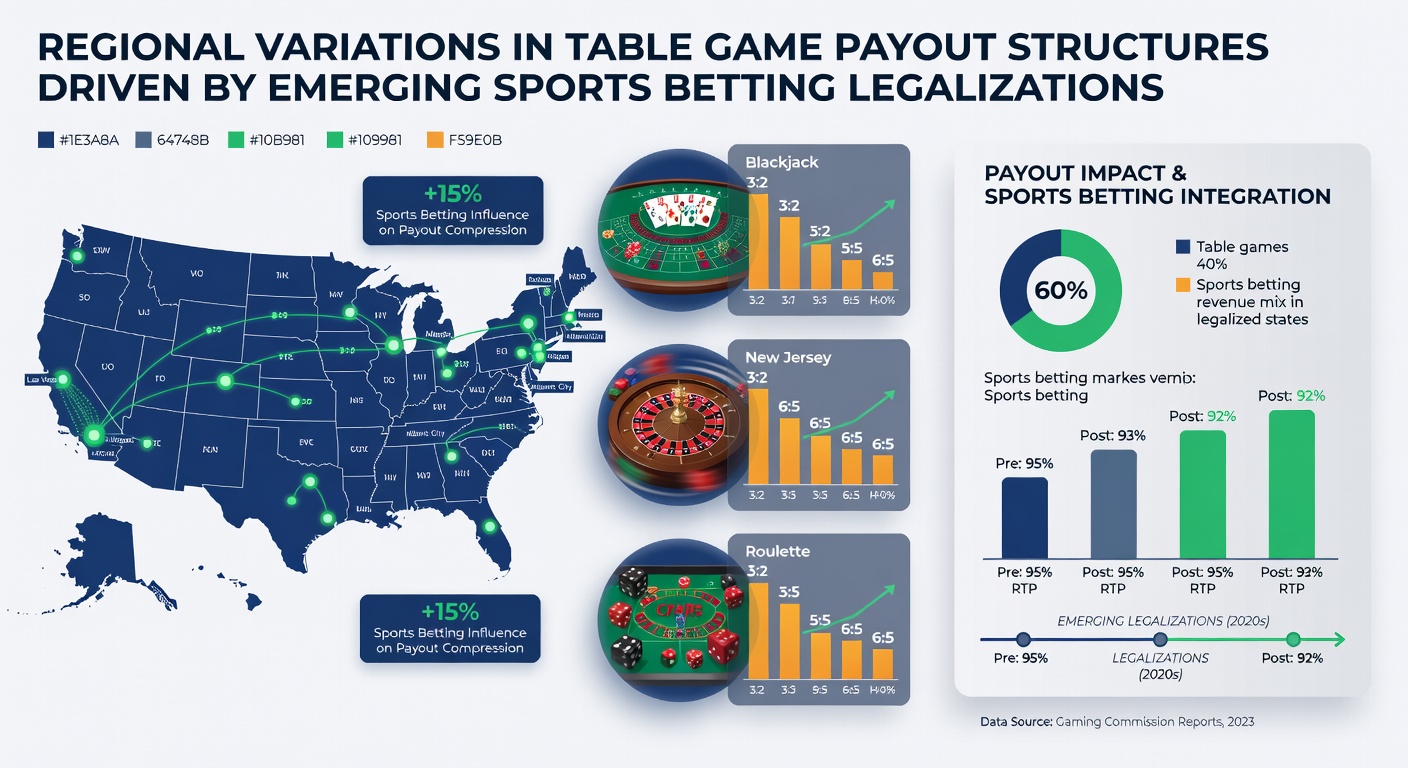
Meanwhile, Japanese prefectures preparing for integrated resort openings continue to study Macau's approach, where table game payout variations have remained minimal despite sports betting pilots because regulatory caps on hold percentages predate recent sports legalization discussions. Academic analyses from regional gaming research centers suggest this stability stems from long-standing separation between sports and casino regulatory tracks.
Regulatory Mechanisms Shaping These Variations
Legislative language often dictates the extent of payout flexibility, with some jurisdictions requiring minimum return-to-player thresholds for table games when sports betting licenses are issued together. Data compiled by the Nevada Gaming Control Board through mid-2026 shows that properties with combined operations maintained consistent roulette payout structures because existing statutes limited simultaneous revisions across product categories.
Other regulators impose reporting requirements that track how sports betting revenue influences table game economics, leading operators to publish adjusted payout schedules quarterly. These disclosures reveal regional clusters where states with similar tax structures on sports handle table games differently from those applying progressive taxation models.
Conclusion
Patterns emerging from multiple regulatory bodies demonstrate that sports betting legalizations drive table game payout modifications primarily through competitive pressures and bundled licensing requirements rather than uniform global standards. Jurisdictions continue to refine these structures as new data becomes available, with June 2026 serving as a checkpoint for several markets evaluating the cumulative effects of integrated betting environments.