Regional Adjustments to Minimum Bet Thresholds in Digital Poker Rooms Align with Sports Wagering Laws Across States
Blake Bennett · Jul 28, 2026
Regional Adjustments to Minimum Bet Thresholds in Digital Poker Rooms Align with Sports Wagering Laws Across States
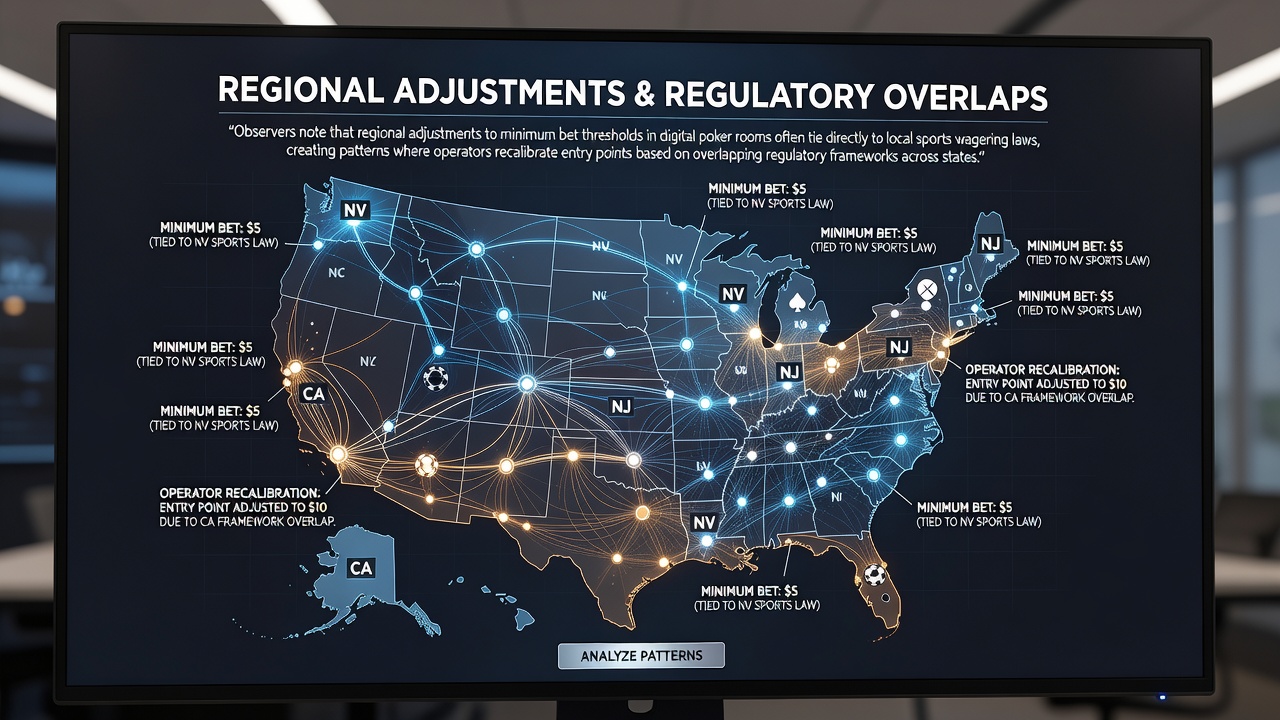
Observers note that regional adjustments to minimum bet thresholds in digital poker rooms often tie directly to local sports wagering laws, creating patterns where operators recalibrate entry points based on overlapping regulatory frameworks across states, and this connection stems from shared compliance requirements that govern both verticals under unified gaming statutes. Data from multiple jurisdictions shows operators monitoring legislative changes in sports betting to adjust poker table minimums, since many states embed poker regulations within broader gambling control acts that also cover sports wagers. Research indicates these recalibrations occur when new sports betting licenses activate, prompting poker platforms to align entry thresholds with risk management rules already applied to sports markets.
Regulatory Overlap Driving Threshold Changes
States that legalized sports wagering after 2018 frequently revised their gaming codes to include digital poker, and these revisions often specify minimum bet floors tied to overall operator capitalization standards derived from sports betting operations. According to records from the Pennsylvania Gaming Control Board, several online poker rooms adjusted their $0.50 minimums upward to $1.00 in early 2025 following expansions in sports betting market access, while similar moves appeared in New Jersey where the Division of Gaming Enforcement documented parallel shifts in 2024. Operators recalibrate because sports wagering laws impose liquidity requirements that carry over to poker rooms operating under the same corporate umbrellas, and this practice maintains consistent capital reserves across product lines.
But here's the thing: the patterns emerge most clearly in states with unified regulatory bodies overseeing both sports and poker, whereas separate licensing streams in other regions produce less synchronized adjustments. Evidence from Michigan's Gaming Control Board reveals that when sports betting handle grew beyond certain quarterly thresholds in 2025, licensed poker platforms raised minimum bets by 25 percent to match updated reserve calculations applied to sports books. Those who've studied these frameworks observe that the recalibrations reduce administrative duplication since operators already submit unified financial reports covering multiple game types.
State-Specific Patterns in 2026
By July 2026, several additional states are scheduled to implement sports betting expansions that include explicit references to digital poker minimums, and preliminary filings indicate operators in those markets plan threshold increases ranging from 10 to 40 cents per hand. Data compiled by state regulators shows these changes cluster in regions where sports wagering laws cap the number of permitted operators, thereby concentrating market share among fewer entities that must then standardize poker entry points to meet statewide reporting mandates. One study from a university research group tracking multi-state compliance found that operators with licenses in both sports-heavy and poker-heavy jurisdictions tend to apply the stricter minimum across all platforms to simplify audits.

What's interesting is how these adjustments sometimes precede formal sports betting launches by several months, as operators test compliance models ahead of full rollout. Figures from the Nevada Gaming Control Board illustrate that poker rooms lowered certain minimums in 2023 when sports betting regulations introduced tiered licensing tiers, then reversed course once overlapping tax structures took effect. Researchers discovered similar sequences in West Virginia, where legislative updates effective in mid-2026 are projected to synchronize poker and sports thresholds through shared responsible gaming fund contributions calculated on total handle.
Operator Responses and Market Effects
Operators respond to these overlapping frameworks by deploying automated monitoring systems that flag upcoming sports betting rule changes and trigger poker recalibrations within defined compliance windows. Records show that companies holding multi-state licenses often standardize minimum bets at levels satisfying the most restrictive jurisdiction in their portfolio, and this approach avoids repeated filings when regulations evolve. Data indicates that such standardization produces measurable effects on player volume, with lower-threshold rooms retaining higher session counts in states where sports wagering laws permit more flexible capital rules.
Take one regulatory filing from a major platform that revealed adjustments in three states during the same quarter after a sports betting tax rate modification took effect, and those changes aligned poker minimums with the new sports reserve percentages. Observers note that smaller operators without multi-state footprints sometimes delay recalibrations until enforcement notices arrive, whereas larger entities implement changes proactively to maintain uniform user experiences across borders.
Conclusion
The documented connections between sports wagering laws and digital poker minimum bet thresholds continue to shape operator strategies as more states finalize their regulatory structures. Evidence from licensing records demonstrates that these patterns persist wherever unified gaming statutes govern both activities, and further adjustments are anticipated when additional sports betting markets activate in 2026 and beyond. State agencies maintain ongoing oversight through unified reporting requirements that capture data from both verticals, ensuring that recalibrations remain consistent with the broader compliance environment.