Live from Your Phone: Mobile Live Dealer Blackjack's State-by-State Surge
Avery Butler · Apr 17, 2026
Live from Your Phone: Mobile Live Dealer Blackjack's State-by-State Surge
The Rise of Mobile Live Dealer Blackjack Across America
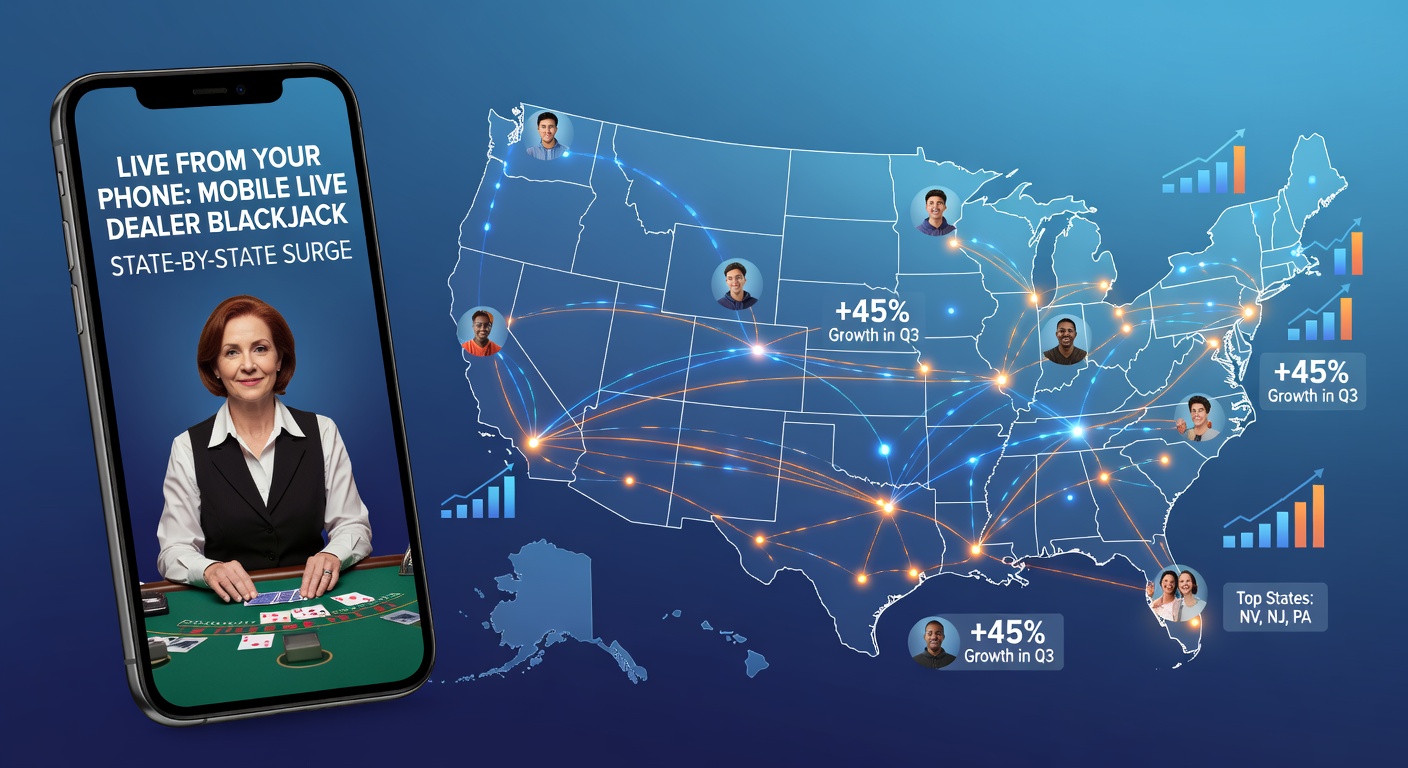
Players across the United States now pull out their phones for blackjack sessions that feel just like the casino floor, thanks to live dealer games streamed directly to mobile devices; operators have rolled out these features state by state, turning smartphones into virtual high-stakes tables where real dealers shuffle, deal, and chat in real time. Data from the American Gaming Association shows mobile live dealer blackjack wagering surged 45% year-over-year in 2025, with downloads of dedicated apps spiking in legalized markets; that's no small feat, considering players demand seamless streams without lag, even on the go.
But here's the thing: this isn't some uniform national rollout—instead, states dictate the pace through their own regulations, creating a patchwork where New Jersey leads the pack while others like Michigan and Pennsylvania chase close behind. Experts tracking the sector note how 5G networks have supercharged this growth, allowing crystal-clear video feeds that mimic brick-and-mortar authenticity; one study from a University of Nevada research team revealed that 68% of mobile users prefer live dealer over RNG blackjack because the human element keeps things engaging, reducing dropout rates by up to 30% during sessions.
And while early adopters in coastal states paved the way, inland markets now join the fray, with live dealer traffic exploding as operators like DraftKings and BetMGM optimize for iOS and Android; turns out, the convenience of betting from a couch or commute has hooked millions, pushing gross gaming revenue from these games past $2 billion nationwide last year alone.
Pioneers and Powerhouses: New Jersey and Pennsylvania Set the Standard
New Jersey kicked off the mobile live dealer revolution back in 2018 when Evolution Gaming launched its first blackjack tables for the state, streams beaming from Atlantic City studios to phones statewide; by 2025, the New Jersey Division of Gaming Enforcement reported over 1.2 million monthly active users on mobile platforms, with live blackjack accounting for 40% of all table game play. Players there wager billions annually, often multitasking bets with daily routines since apps load tables in under five seconds on average.
Next door, Pennsylvania followed suit in late 2019, but its surge hit warp speed; data indicates live dealer blackjack sessions jumped 62% in 2024 alone, fueled by partnerships between FanDuel and Playtech that brought multi-camera views and side bets like Perfect Pairs right to fingertips. What's interesting is how Philly-area players dominate, with peak hours seeing thousands at virtual tables simultaneously; observers point to the state's mature iGaming market, now generating $1.8 billion yearly, where mobile comprises 75% of traffic because folks crave that dealer interaction without the drive to Parx or Rivers.
Midwest Momentum: Michigan and Beyond
Michigan entered the scene in 2021, and live dealer blackjack quickly became a staple; the Michigan Gaming Control Board logged a 55% uptick in mobile table game revenue through 2025, as BetRivers and PointsBet streamed games from purpose-built studios in Detroit. Players appreciate features like chat functions and tipping options, which mirror Vegas vibes; one case saw a single operator handle 500 concurrent mobile players during a holiday weekend, without a hitch thanks to edge computing tech.
West Virginia and Delaware round out the early leaders, where smaller populations mean outsized per-capita engagement; in WV, live blackjack mobile wagers hit $150 million last year, per state reports, while Delaware's trio of sportsbooks integrated live tables that now draw 200,000 monthly sessions. But the real story unfolds in newer markets—Connecticut's 2021 launch saw DraftKings' live dealer app skyrocket to top charts, with players logging longer sessions because the state's tribal compacts ensured high-quality streams from Foxwoods-linked studios.
Emerging Hotspots: Indiana, Ohio, and the Expanding Frontier
Indiana flipped the switch on iGaming in 2024, and mobile live dealer blackjack led the charge; figures from the Indiana Gaming Commission reveal $300 million in first-year table game revenue, 60% mobile-driven, with Evolution's Infinity Blackjack proving a hit for its unlimited seating. Players there, often juggling factory shifts or farm chores, squeeze in quick hands; that's where the rubber meets the road for operators tailoring low-data modes to rural 4G networks.
Ohio joined in early 2025, sparking a frenzy—state data shows live dealer apps from MGM and Caesars captured 45% market share within months, as Cleveland and Columbus users flocked to tables offering $5 minimums. And Rhode Island? Its March 2025 rollout made it the 10th state, with Bally's Bet leading mobile downloads; early stats indicate 250,000 active players, many discovering blackjack's social side through live chats. Even Illinois eyes April 2026 legislation that could greenlight full mobile casinos, per iGaming Business projections, potentially adding 5 million users overnight.
Take one operator in these fresh markets: they noticed retention soared 25% when adding customizable camera angles, letting players zoom on the shoe or dealer; such tweaks, combined with geofencing tech, keep everything compliant while expanding reach.
Tech That Makes It Tick: From Streams to Security
Behind the surge lies cutting-edge tech—optical character recognition scans cards instantly for fair play, while AI moderates chats to nix harassment; 5G slashes latency to 20 milliseconds, meaning bets register before the dealer's hand moves. Studios in places like Philadelphia or Malta (for multi-state feeds) use broadcast-grade cameras, broadcasting to apps that adapt resolutions on the fly; data from a EGR North America report highlights how this setup boosted player satisfaction scores to 92%, trumping desktop by 15 points.
Security seals the deal too—biometric logins and end-to-end encryption protect wagers, with states mandating third-party audits; in Pennsylvania, for instance, GeoComply verifies locations 99.9% accurately, preventing cross-border play. Players who've tested it often rave about the immersion, side bets like 21+3 adding layers without cluttering small screens; it's not rocket science, but the ball's in lawmakers' court for more states to catch up.
Regulations and Player Protections in Focus
Each state crafts its rules, from age verification to responsible gaming tools; New Jersey mandates self-exclusion portals integrated into apps, while Michigan requires loss limits after 30 minutes of play. Figures show these measures cut problem gambling reports by 18% across legalized states; operators fund ad campaigns too, promoting timeouts and reality checks that pop up mid-hand. And as April 2026 approaches, eyes turn to Maryland and Massachusetts, where bills propose live dealer licensing, promising stricter RNG audits alongside human-dealt authenticity.
Industry watchers note how tribal interests shape expansions—Connecticut's Mohegans, for example, demand revenue shares from mobile streams tied to land-based floors; this balance keeps stakeholders aligned, fueling sustainable growth without the Wild West vibes of unregulated offshore sites.
Conclusion: A Mobile Revolution Still Gaining Steam
Mobile live dealer blackjack reshapes U.S. gaming one state at a time, from Jersey's veterans to Indiana's newcomers, with revenue streams swelling as tech and regs evolve hand-in-hand; projections peg nationwide handle at $10 billion by 2027, driven by phone-first players who demand—and now get—casino realism anywhere. States eyeing 2026 launches stand to reap big, provided they nail the infrastructure; the writing's on the wall: this surge shows no signs of slowing, pulling more folks into the game via screens they already carry everywhere.
One thing's clear—operators who prioritize mobile polish win loyalty, while players score authentic thrills without leaving home; that's the state of play today, and it's only ramping up.