Feedback Loops from Player Communities Fueling Skill-Based Slot Innovations Under State Laws
Zara Weber · Jul 12, 2026
Feedback Loops from Player Communities Fueling Skill-Based Slot Innovations Under State Laws
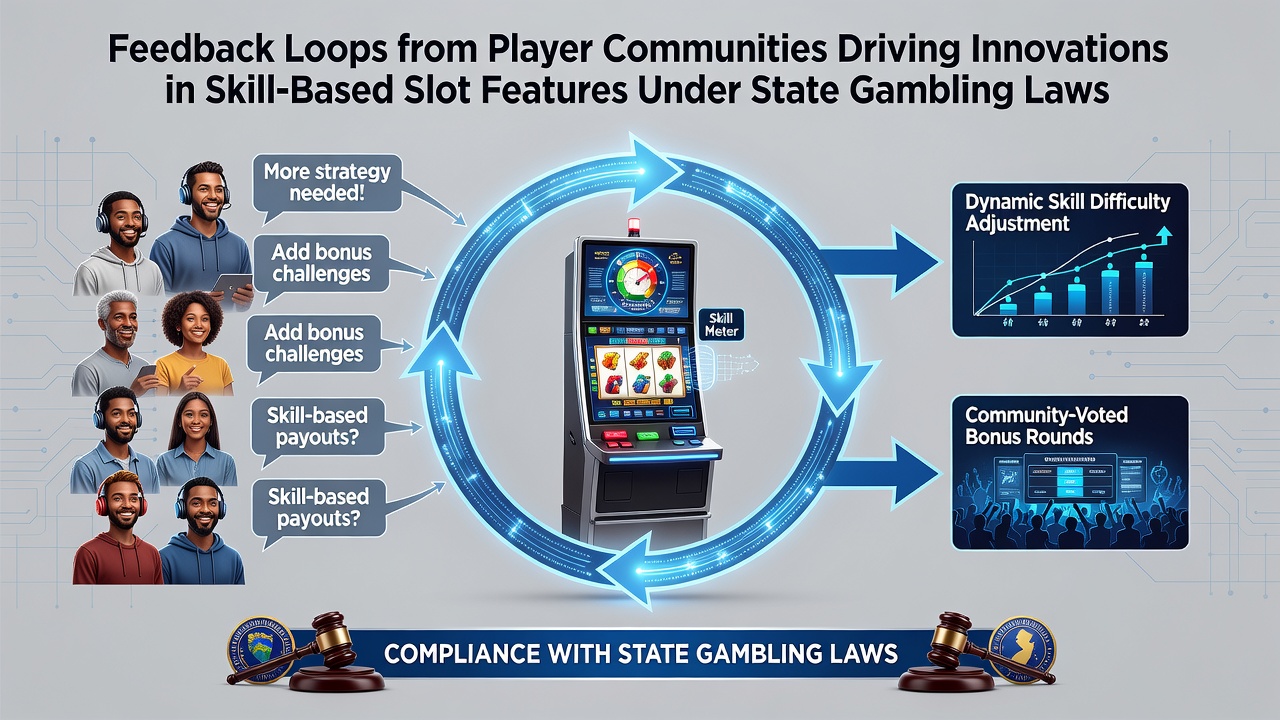
Player communities have emerged as active participants in shaping skill-based slot features across regulated markets, and their input creates ongoing cycles that developers and regulators must address together. These loops begin when players share observations about game mechanics through forums, social platforms, and direct operator channels, then operators relay aggregated data to studios that refine skill elements such as timing-based bonuses or decision trees while remaining compliant with individual state statutes. States including Nevada, New Jersey, and Pennsylvania maintain distinct frameworks that govern how much skill can influence outcomes in slot products, which forces developers to balance player requests against legal boundaries. Research from the University of Nevada, Las Vegas indicates that community suggestions often focus on adjustable difficulty levels and transparent probability displays, prompting studios to introduce modular features that states can approve more readily.Mechanisms of Community Input in Regulated Environments
Operators track player engagement metrics alongside qualitative feedback to identify patterns in how skill components perform under real conditions, and this data flows back to design teams who adjust reel configurations or bonus triggers accordingly. State laws require that any modification undergo review processes, so companies document community-driven changes meticulously before submitting updates for approval, which extends development timelines yet produces more stable releases.
What's interesting is how regional differences in regulation affect the speed of these loops. In New Jersey, for instance, the Division of Gaming Enforcement requires detailed mathematical reports on skill elements, whereas Pennsylvania's gaming control board emphasizes testing protocols that incorporate player behavior data. Developers respond by building flexible architectures that accommodate multiple jurisdictions without complete redesigns.
Skill Feature Adjustments Sparked by Player Data
Communities frequently request clearer indicators of skill contribution versus random elements, and studios have responded with visual overlays that display real-time performance scores during play sessions. These additions emerged after repeated player reports highlighted confusion over payout structures, leading operators to request regulatory variances that several states granted in 2025 adn continued refining through mid-2026.
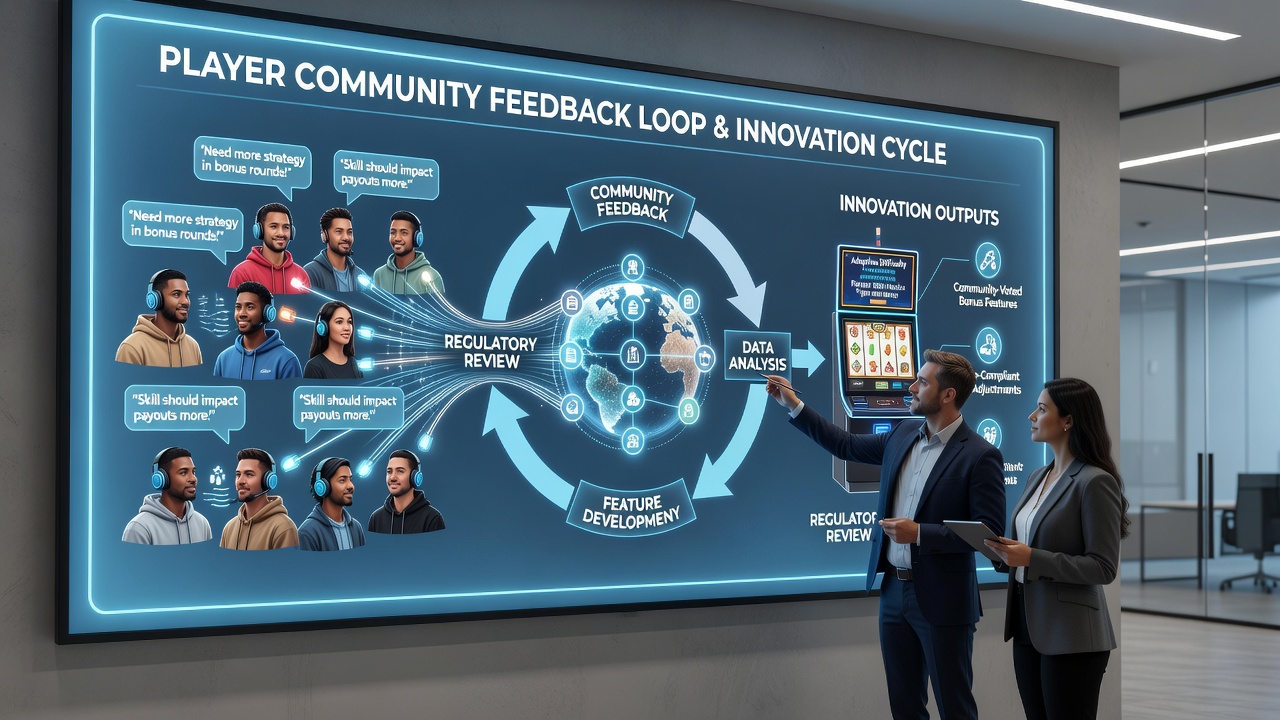
Data shows that features such as choice-based mini-games and rhythm-matching bonuses gained traction after community polls revealed preferences for interactive segments that reward practice without altering core return-to-player percentages. Studios now embed logging systems that capture decision patterns, allowing them to iterate on these elements while preserving compliance with state-mandated randomness standards.
Regulatory Guardrails and Iterative Development Cycles
State gambling laws establish clear parameters around skill-based content, requiring that chance remain the dominant factor in determining outcomes even when player input is present. This constraint shapes feedback loops because communities sometimes propose mechanics that exceed permissible thresholds, forcing developers to translate those ideas into compliant alternatives such as cosmetic customization options or secondary skill challenges that do not affect primary payouts.
According to the Nevada Gaming Control Board guidelines, any skill component must undergo independent laboratory testing before deployment, which creates checkpoints where community suggestions are evaluated for legality. Operators in multiple states report that incorporating early regulatory consultation shortens approval times and allows more responsive updates based on player input gathered after initial launches.
Geographic Variations in Feature Rollouts
Markets with mature online frameworks like New Jersey have seen faster integration of community-requested skill layers compared to states that only recently authorized digital play. Developers monitor cross-border player migration patterns, noting that users familiar with one jurisdiction's offerings often request similar mechanics elsewhere, which prompts operators to advocate for harmonized standards where possible.
By July 2026, several multi-state platforms had deployed unified skill modules that adjust presentation based on local rules, demonstrating how feedback loops operate across regulatory boundaries without violating individual statutes. These adaptations rely on backend configuration tools that isolate skill logic from chance generators, satisfying both player demands and state oversight requirements.
Conclusion
Feedback loops connecting player communities to skill-based slot innovation continue to evolve under the patchwork of state gambling laws, with each cycle producing incremental refinements that respect legal limits while addressing user preferences. Operators and developers maintain structured channels for input, route suggestions through compliance reviews, and release updates that reflect both community priorities and regulatory expectations. This process supports steady advancement in feature design across expanding markets.