Cross-Border Data Sync Challenges Reshaping RNG Certification Timelines for Interstate Slot Networks
Sofia Meier · Jun 21, 2026

Cross-Border Data Sync Challenges Reshaping RNG Certification Timelines for Interstate Slot Networks
Interstate slot networks have expanded steadily since 2023, yet cross-border data synchronization remains a persistent hurdle that directly alters RNG certification schedules. Operators who link machines across multiple jurisdictions must align random number generator outputs with each state's distinct testing protocols, and any lag in data transfer between systems creates bottlenecks in approval processes. Data shows that certification timelines extended by an average of 45 days in affected networks during early 2025, according to figures compiled by the American Gaming Association.
Data Flow Barriers Between Jurisdictions
Slot networks spanning states such as Nevada, New Jersey, and Pennsylvania rely on centralized servers to push consistent RNG sequences, but differences in encryption standards and audit frequencies disrupt seamless exchange. One network operating between Nevada and Pennsylvania encountered repeated delays when packet loss during peak hours prevented real-time verification of seed values. Researchers at the University of Nevada, Reno documented similar patterns in a 2025 study, noting that synchronization failures often trace back to mismatched timestamp formats rather than outright technical incompatibility.
Regulators in each state demand independent RNG audits before machines can accept wagers, and cross-border operators must submit synchronized datasets for simultaneous review. When transmission protocols fail to match, certification bodies pause the process until corrected files arrive, which pushes back launch dates for new game titles. In June 2026 several multistate platforms postponed scheduled updates after data integrity checks revealed discrepancies in sequence logs transmitted from one state server to another.
RNG Certification Processes Under Pressure
Random number generator certification requires exhaustive statistical testing against predefined benchmarks, and interstate operators face the added layer of ensuring every participating jurisdiction receives identical test packages. Certification labs typically run thousands of simulation cycles to confirm fairness, yet incomplete data feeds from remote sites force retesting cycles. The New Jersey Division of Gaming Enforcement reported that 18 percent of interstate slot submissions in the first quarter of 2026 required at least one resubmission due to sync-related gaps.
These repeated submissions consume both time and resources, stretching certification windows from the standard 60 days to as long as 110 days in documented cases. Observers note that smaller operators without dedicated compliance teams experience the longest delays, while larger networks mitigate some impact through redundant data pipelines. Still, even well-resourced companies report that reconciling audit trails across state lines remains labor-intensive because each regulator maintains separate formatting requirements.
Examples from Active Interstate Networks
Take one operator managing linked progressive slots between Nevada and Michigan. The company encountered a six-week certification hold in late 2025 when a firmware update altered the way seed values were logged, and Michigan's system could not parse the new format without manual intervention. Similar incidents have surfaced in other corridors, including connections between Pennsylvania and West Virginia, where data compression differences triggered automated rejection scripts at the receiving end.
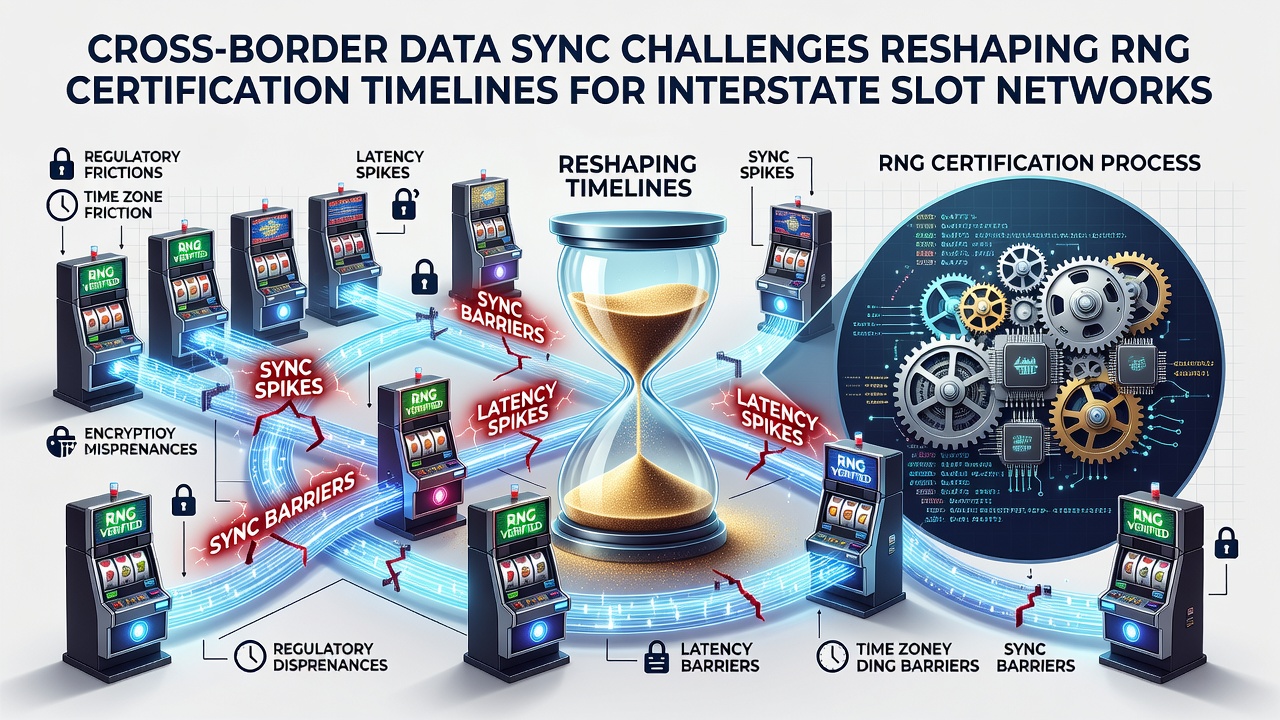
Industry reports indicate that these synchronization issues have become more visible as networks scale, particularly after additional states legalized interactive gaming components attached to physical slot floors. Data from the National Council of Legislators from Gaming States shows that at least four multistate slot agreements faced timeline adjustments between January and May 2026 solely because of data alignment problems.
Regulatory Adjustments and Technical Responses
State gaming commissions have begun exploring shared testing frameworks that could reduce redundant submissions, yet adoption remains uneven. Some regulators now accept supplemental verification reports from labs already approved in partner jurisdictions, which trims a portion of the delay. Others continue to insist on full local retesting, citing statutory requirements that leave little room for reciprocity. The result is a patchwork approach where operators must navigate different rules depending on which states participate in each network.
Technical solutions such as standardized API endpoints and blockchain-based audit logs have appeared in pilot programs, and early results suggest these tools can cut transmission errors by up to 30 percent. Still, integration costs and legacy system constraints slow broader rollout. Figures released by the Canadian Gaming Association, which tracks similar cross-province challenges, reveal parallel experiences in other North American markets where data harmonization efforts have produced incremental rather than transformative gains.
Looking Ahead for Certification Timelines
As interstate slot networks continue to mature, the pressure on RNG certification schedules shows no immediate sign of easing. Operators and regulators alike are testing incremental fixes, from improved data compression standards to coordinated audit calendars, yet full synchronization across all participating states remains an ongoing project. Evidence gathered through mid-2026 indicates that networks investing in unified logging platforms achieve faster approvals, while those relying on ad-hoc file transfers continue to encounter periodic setbacks.
Conclusion
Cross-border data synchronization challenges have become a defining factor in how quickly RNG certifications move forward for interstate slot networks. The interplay between technical mismatches, regulatory variations, and increasing network scale creates measurable extensions in approval timelines, and current patterns suggest these dynamics will persist unless further standardization takes hold. Operators tracking developments into the second half of 2026 continue to adjust project schedules accordingly, while state agencies evaluate new protocols aimed at reducing friction without compromising verification standards.